 Skip to content


Hello, garden enthusiasts!
I’m Meda, an agronomist, and I’m ready to share with you a list of the 10 easiest vegetables to grow specifically in raised beds. I’ve tried them myself and can vouch for them. I encourage you to try them and let me know how it goes.
Gardening in raised beds has become increasingly popular among both experienced and beginner gardeners. These raised beds offer many advantages:
- better soil drainage,
- easier pest control,
- easier maintenance.
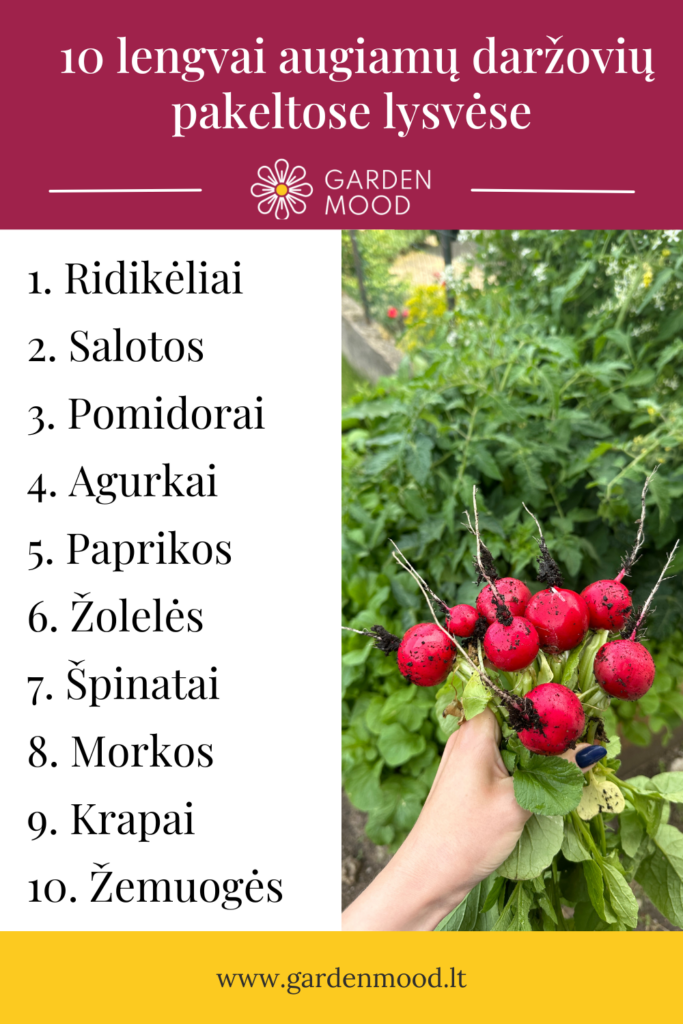
If you’re planning to start growing in raised beds, it’s essential to select the right vegetables for a successful and abundant harvest. In this blog, I share 10 easy-to-grow vegetables for raised beds and a guide for beginner gardeners.
1. Radishes
I like radishes for three reasons:
- They are one of the earliest spring vegetables. You can sow them in early spring or late summer for a fall harvest. Radishes are generally not suitable for planting in summer in hot climates, as high temperatures can cause them to go to seed instead of producing a crop.
- Radishes are one of the fastest-growing vegetables, making them perfect for impatient gardeners. They typically mature in just 20-30 days from sowing.
- Radishes are also rich in essential nutrients (vitamin C, B9, antioxidants, fiber, and potassium).
You can sow them directly into the raised bed and harvest them in just a few weeks.


2. Lettuce
Lettuce is a cool-season plant that thrives in raised beds. It has a short growing cycle, making it an ideal choice for a quick and continuous harvest.
For a spring harvest, sow lettuce seeds directly into raised beds 2-4 weeks before the last expected frost. Lettuce prefers temperatures between 45°F and 75°F (7°C to 24°C).
There are several types of lettuce (Iceberg, Romaine, Batavian, etc.), each with unique flavor, texture, and appearance characteristics.

3. Tomatoes
Tomatoes are perhaps the most popular vegetable among gardeners and can be easily grown in raised beds. It’s important to choose a dwarf variety or those tomatoes that are grown in pots on the patio. I’ve personally tried these varieties: ‘Pearl Drop’, ‘Vilma’.
No matter how short the tomatoes are, it’s important to provide them with supports so that the plant stands firm when the crop matures. I also recommend planting them in a checkerboard pattern and at larger distances to ensure they get enough sunlight.

4. Cucumbers
I’ve had great success growing cucumbers in raised beds. They grow as climbers, so they need more space, but I let them grow freely beyond the bed’s borders.
I grew the productive ‘Mirabelle’ variety myself, resulting in a particularly large harvest with just two seedlings.
In spring, I started the seeds in a pot and transplanted the seedlings into the bed only when the weather warmed up. When the soil temperature rises to 60°F (15°C), seeds can also be sown directly into the soil and will germinate well there.

5. Peppers
This year, I tried growing peppers in raised beds. I planted them in pots for germination early in spring, as the seedlings grow very slowly. They need warm temperatures and plenty of sunlight. My mistake was planting peppers next to tomatoes, which blocked the sun, preventing them from ripening. Don’t repeat my mistake!
I love peppers because they come in various colors. Choose different colored varieties to add more color to your garden and plate.

6. Herbs
Growing herbs in raised beds is a great way to enhance your diet with aromatic plants. Choose herbs that thrive in your climate and growing conditions. Common herbs that do well in raised beds include basil, parsley, cilantro, thyme, oregano, rosemary, sage, and mint. Grow them to use in cooking, teas, or as home fragrances.
Herbs not only benefit your diet but also repel pests in raised beds. For example, planting basil near tomatoes can improve the flavor and growth of both plants, while herbs like rosemary and thyme can act as natural pest repellents.

7. Spinach
I love spinach because it’s great not only for salads but also for green smoothies.
Spinach is a cool-season plant, so it requires cooler temperatures for germination and growth. Plant spinach seeds in early spring as soon as the soil can be prepared. For a fall harvest, sow seeds in late summer, allowing enough time for the plants to mature before the first frost.

8. Carrots
Carrots thrive in loose, well-drained soil, making raised beds an ideal environment. Choose shorter-growing varieties for easier cultivation, and enjoy sweet, homegrown carrots in a few months.
Carrot seeds are small, and proper spacing is crucial for healthy root development. Sow seeds directly into the raised bed, scattering them in rows with spacing. Aim for 1-2 inches (2-5 cm) between seeds, and thin seedlings to 2-3 inches (5-7 cm) once they sprout.

9. Dill
Dill is a fragrant and aromatic herb loved by Lithuanians and beyond.
Choose a variety that suits your preferences and purpose, whether it’s fresh leaves, seeds, or both. Some popular varieties are Bouquet (compact and ideal for pots or beds) and Mammoth (tall with lots of green mass and seeds).

10. Strawberries
Growing strawberries or wild strawberries in raised beds is a delightful experience. They grow very well and look beautiful. Of course, they also provide delicious and nutritious berries!
Since strawberry seeds are very small and take a long time to germinate, they need to be sown in a box very early in spring. Later, I transplant them into larger pots and only plant them in raised beds when the weather warms up.
They thrived there, grew many runners, and multiplied on their own. A great solution is to plant them (like cucumbers) near the side of the bed, as they then get more sun and the berries grow along the sides of the bed.

My recommendation is to start gardening with raised beds, and to make the experience even more enjoyable, use this list of vegetables provided below. These ten easy-to-grow vegetables offer a diverse and flavorful harvest, making them perfect for both beginners and experienced gardeners. Don’t forget to adapt your choices to the local climate and soil conditions for the best results.
Happy gardening!
Meda, founder of “Garden Mood”