 Skip to content


Hello, garden enthusiasts!
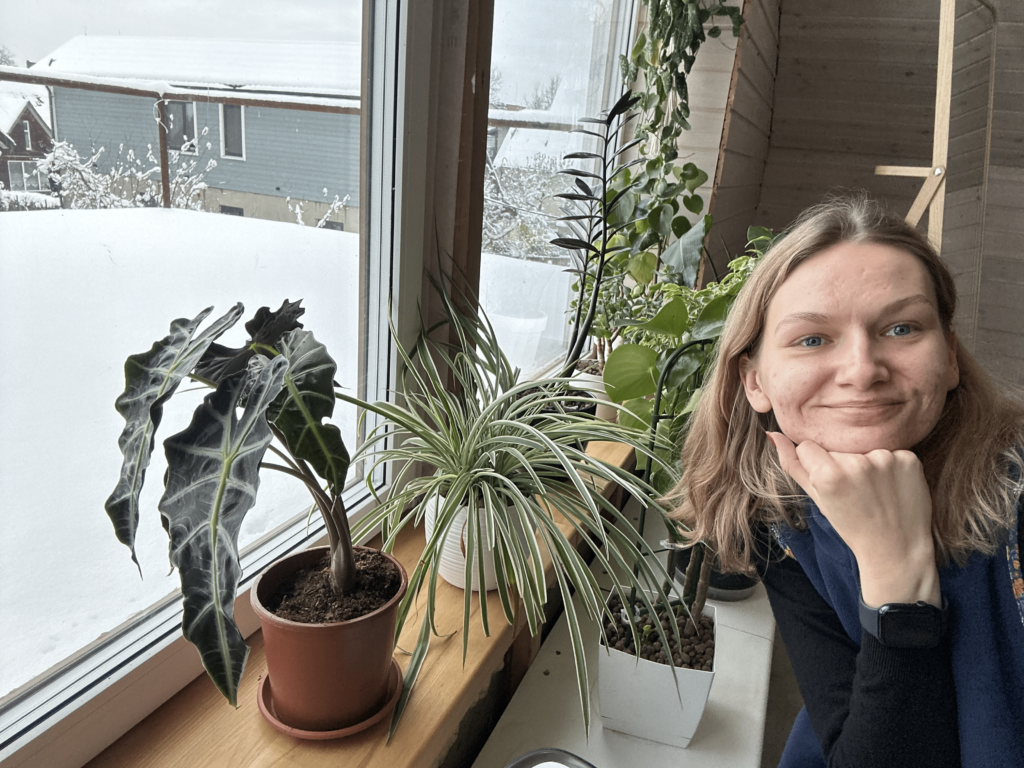
I’m Meda, an agronomist ready to share with you 10 tips for taking care of indoor plants during the winter season. I’ve tried many things myself and had to say goodbye to more than one plant before finding what works to keep them beautiful and healthy through winter. If you try these tips, let me know how it goes.
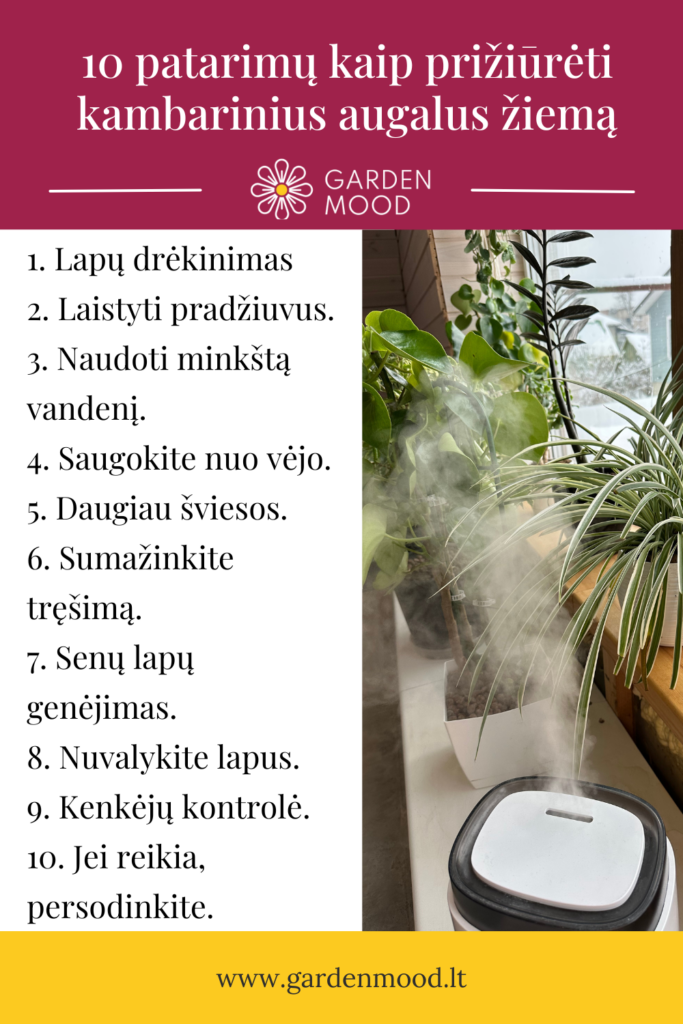
1. Leaf Moisturizing
Indoor heating reduces humidity levels. Many indoor plants prefer higher humidity, so consider using a humidifier, or if you don’t have one, you can simply spray the leaves with water.
I use a diffuser designed to vaporize water with essential oils, and it works great for me. Plants receive a fine mist rather than large droplets that usually fall to the ground.


2. Adjust Watering
Winter indoor heating systems can dry out the air. Monitor soil moisture and adjust your watering schedule accordingly. The easiest way to check moisture is with a wooden stick. Insert it into the pot, pull it out, and check. If the stick is covered in moist soil, it’s not time to water yet; if the stick is dry, it’s time to water.
Be sure not to overwater, otherwise the plant’s roots will start to suffocate and rot. Then you’ll need to repot, and more about that in the next blog post.


3. Water Selection
Plants are very sensitive to water hardness, so I don’t recommend watering with tap water directly. It’s better to use snow! Melt it and wait until it warms up, then confidently water your plants.
If you don’t have snow, feel free to use filtered water (I use a carbon filter). If you don’t have that either, fill your watering can with tap water a day before watering and water the plant the next day. During this time, salts and lime will settle at the bottom, and the plant will be less affected by them.


4. Protect from Cold Air
Remember that when the weather gets colder outside, it can be cooler near the window indoors.
- First, check with your hand if there’s a draft coming through the bottom of the window.
- Also, be sure to move the plant away from the window so its leaves don’t touch the cold glass.
- If you frequently open windows and ventilate the room, you shouldn’t keep plants near that window at all.
If the plant is growing in a room where there’s often a draft, it should also be moved to a less windy spot.
Plants exposed to cold wind often have browning or discoloration on the edges and surfaces of their leaves.

5. More Light
As days get shorter, it’s very important to optimize plant lighting. Place them near south-facing windows to get as much sunlight as possible. This is especially important for plants ready to bloom (like orchids).
If there’s a lack of natural light, consider supplementing it with artificial light, such as LED grow lights, to provide the necessary spectrum for photosynthesis. Just remember that electricity costs will be higher. You can use the same lights in early spring if you plan to grow something from seeds. I recommend reading the article “10 Easy-to-Grow Vegetables in Raised Beds.”


6. Reduce Fertilization
Winter is usually a dormant period for many plants, so they don’t need as much fertilization. Fertilizing at the same rate as in spring can even have negative effects, as plants may start to grow rapidly upwards but won’t strengthen due to lack of light.
If your plants are actively growing, I recommend fertilizing every 6-8 weeks with diluted, balanced fertilizers. How do I do it? I use my favorite fertilizers, but I add 5 times less to the watering can than usual.
If your plants aren’t growing, you should postpone fertilization until spring when the growing season resumes.

7. Pruning Old Leaves
You can prune plants during winter as they are in a dormant state, but don’t do it too boldly. What do I do?
- I remove all yellow or dead leaves to encourage growth. They usually appear due to stress (overwatering, lack of sunlight, lack of humidity, etc.).
- If the plant is very dense and light doesn’t reach it (which can cause leaves to fall actively), I prune it more. Healthy cut parts of the plant can be used for propagation.


8. Clean the Leaves
Another task that’s especially important during the cold period when light is very limited is cleaning the leaves. Dust accumulates on leaves, reducing the light flow to the plant. Also, if you spray the leaves with tap water, it’s likely that lime stains will appear on them.
First, I wipe the leaves with a damp soft cloth, then spray them with leaf polish to make them shiny. You shouldn’t overuse it, as some polishes contain substances that can also harm the leaves. You can clean the leaves only of plants with smooth (hairless) leaves.


9. Pest Control
Keep an eye on your plants! I’m not saying every day, but it’s very useful to inspect them closely when watering or spraying the leaves. Winter can bring not only diseases but also pests. Curious where they come from?
- They usually appear with new plants we bring home from the store.
- Sometimes they can also appear due to poor-quality substrate after repotting.
- When you overwater plants, small flying gnats can appear due to moisture.
So, what to do when you notice pests? You can try washing the plant and leaves. However, not all pests will be affected, so chemical measures may be necessary.

10. Repot if Necessary
Winter can bring challenges, but with a little extra attention and care, your indoor plants can thrive even in the coldest months. By adjusting watering schedules, optimizing lighting, maintaining humidity, and considering temperature fluctuations, you can create a favorable environment that allows your leafy companions to flourish and bring greenery to your winter. I hope these tips were helpful to you. And if you’re a true indoor plant lover, I recommend trying the tool pocket, which accompanies me every day in caring for my plants.
Good garden mood!
Meda, founder of “Garden Mood”

Winter can bring challenges, but with a little extra attention and care, your indoor plants can thrive even in the coldest months. By adjusting watering schedules, optimizing lighting, maintaining humidity, and considering temperature fluctuations, you can create a favorable environment that allows your leafy companions to flourish and bring greenery to your winter. I hope these tips were helpful to you. And if you’re a true indoor plant lover, I recommend trying the tool pocket, which accompanies me every day in caring for my plants.
Good garden mood!
Meda, founder of “Garden Mood”